
The Case for Removing the BQE
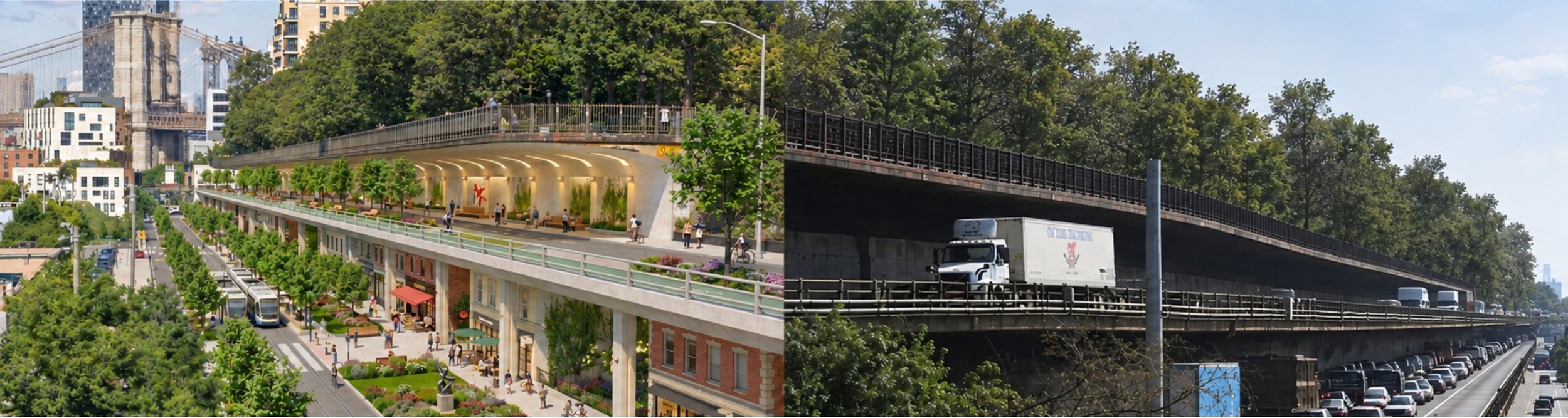
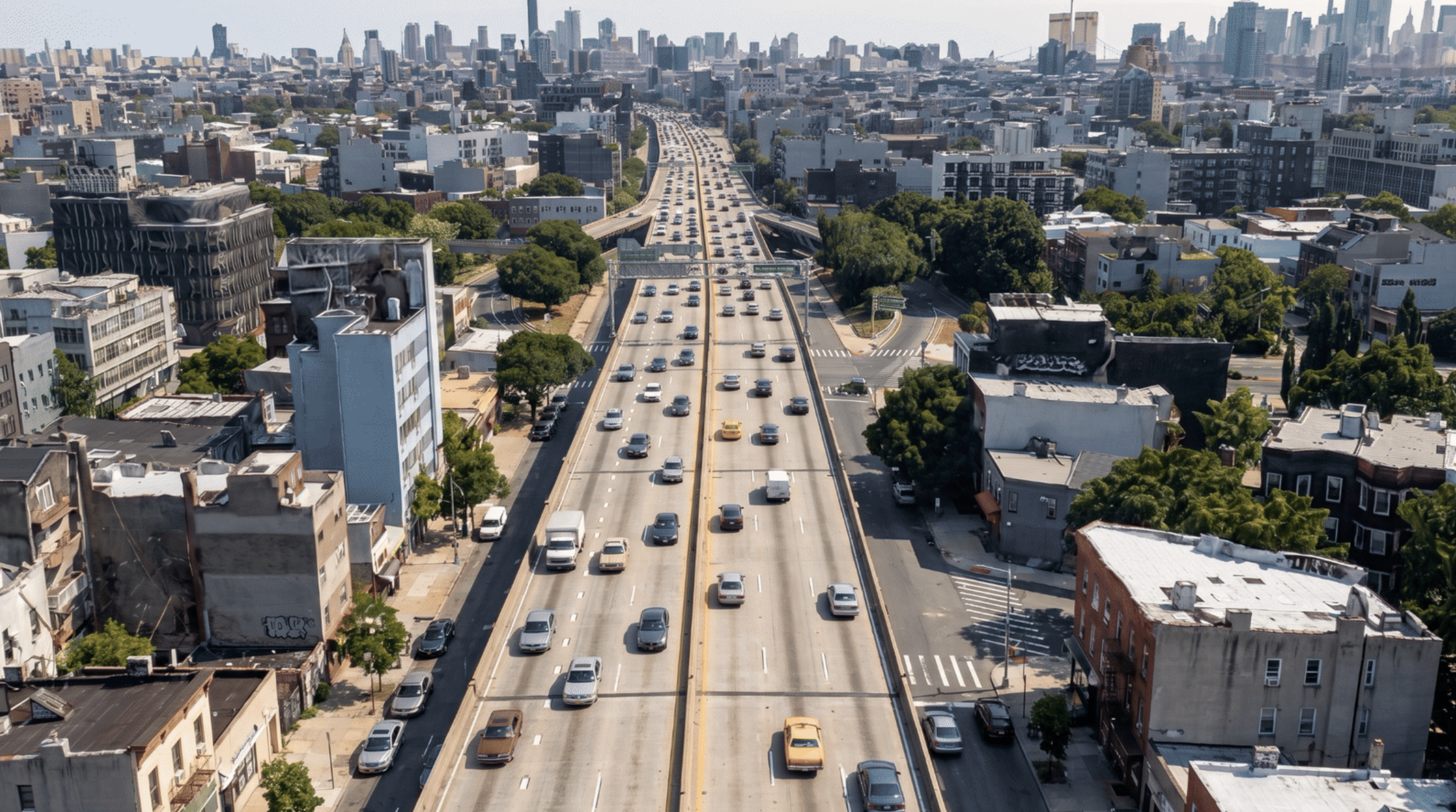
What was marketed as progress came at an enormous cost that still shapes Brooklyn and Queens today
Robert Moses built the BQE in stages between 1937 and 1964.
It is part of Moses’ citywide legacy of urban renewal projects which displaced more than 250,000 New Yorkers, disproportionately immigrant communities and communities of color. It cut a 15-mile path from the Verrazzano Bridge to the Grand Central Parkway in Queens through some of the densest neighborhoods in the country. Entire blocks of housing, businesses, churches, and schools were demolished as the highway carved through the existing street grid.
The damage didn’t end in 1964.
More than six decades later, the BQE still harms. The communities along the BQE live with some of the highest levels of traffic, noise, and air pollution in New York City. Residents are exposed to daily exhaust, fine particulates, and toxic compounds from exhaust and brake and tire wear. These conditions inflict some of the highest childhood asthma rates in the United States, with rates in neighborhoods running at roughly twice the citywide average, as well as cardiovascular disease and other health burdens.
Today, the BQE divides neighborhoods and limits mobility.
It acts as a physical wall, separating neighbors who live just a block apart. Streets dead-end into embankments or underpasses, forcing long detours just to reach schools or jobs on the other side. Despite being built in the name of mobility, the highway has actually reduced safe, direct connections for people walking, biking, or riding transit. The structure continues to lock communities into an auto-dominated pattern that no longer fits the needs or values of a 21st-century city
The BQE has outlived its intended lifespan by twenty years
Fixing the BQE requires a complete rebuild, over decades
A $25-$30 billion megaproject would lock the city into another century of congestion, pollution, noise, and fractured neighborhoods.
A full rehabilitation of the BQE is not a simple repair job. To keep traffic flowing, engineers would need to construct temporary bypass highways through dense neighborhoods. Only then could crews demolish the deteriorating segments and rebuild the expressway, wider, to modern federal standards.
Efforts to rebuild the expressway have repeatedly stalled. In 2018, Mayor Bill de Blasio’s proposal to route a temporary highway across the Brooklyn Heights Promenade collapsed amid community opposition. The Adams administration put forward several reconstruction plans between 2022 and 2024, Mamdani put forward a rehabilitation plan in 2026. None has won federal funding or community support. Planning is further complicated by split jurisdiction: the city controls the stretch through Brooklyn Heights—from Atlantic Avenue to Sands Street, including the aging triple cantilever—while the state owns and manages the remaining segments.
There is a better option: Take it down and replace it with what we need
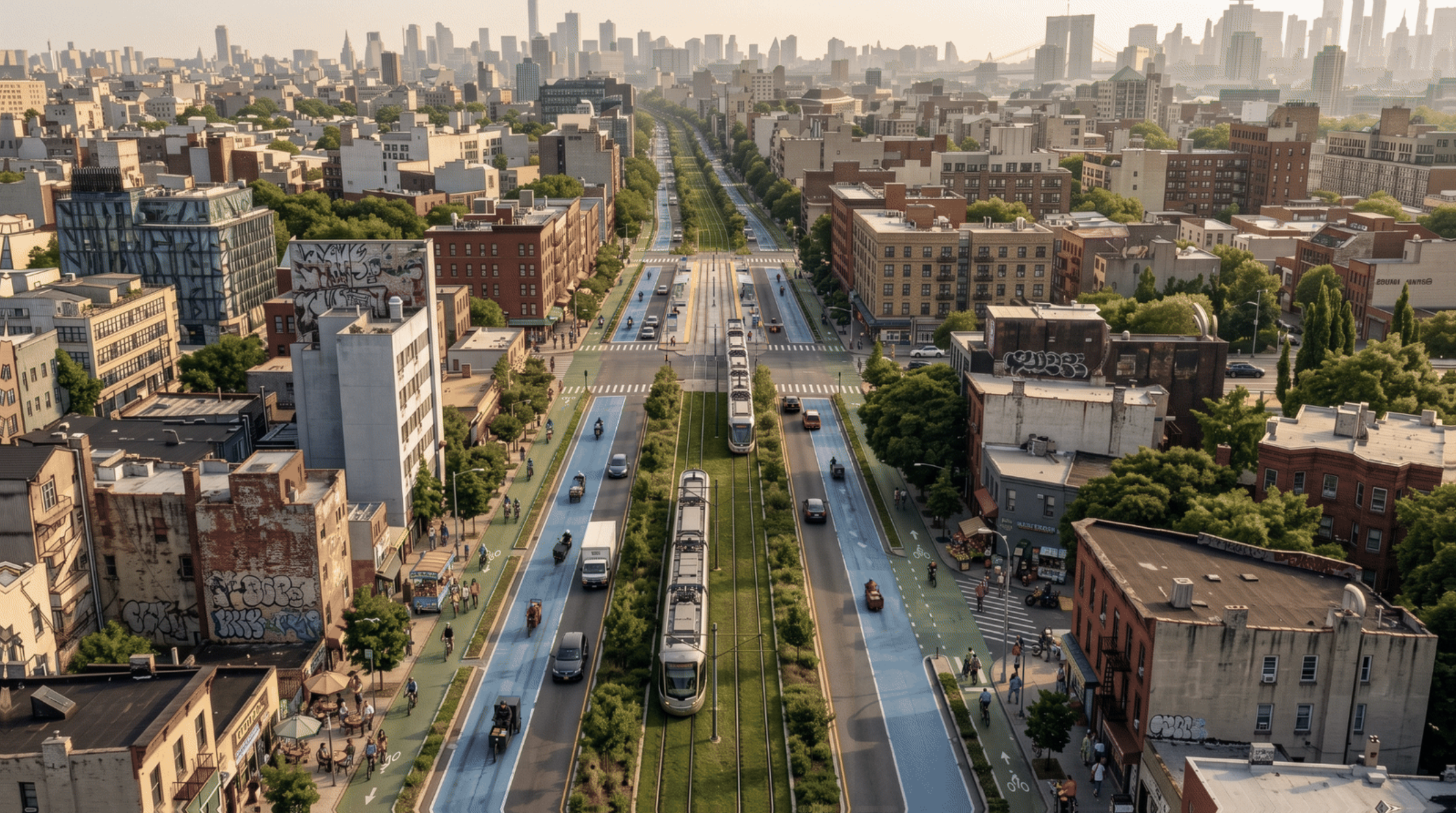
We can—and should—decommission the BQE as a highway, dismantling the viaducts, filling in the trenches, and replacing it with productive, sustainable transit, parks, and neighborhood assets that serve us today.
Decades of experience in cities around the world — including New York — show that highway removal works.
In not one of these cities did the predicted traffic catastrophe materialize: traffic “evaporated” by 15-55% and dispersed, actually (and counterintuitively) declining in adjacent neighborhoods. Transit ridership grew, investment in surrounding areas rose, and the reclaimed land became more livable, more walkable, and more economically productive.
Done right, with anti-displacement protections built in from day one, the communities that were harmed most when the highway was built are the same communities that stand to benefit most from its removal.
After installing transit, the corridor would unlock over 100 acres of land—the size of Soho—enough to address multiple crises at once, from the housing shortage to the parks deficit to climate resilience.
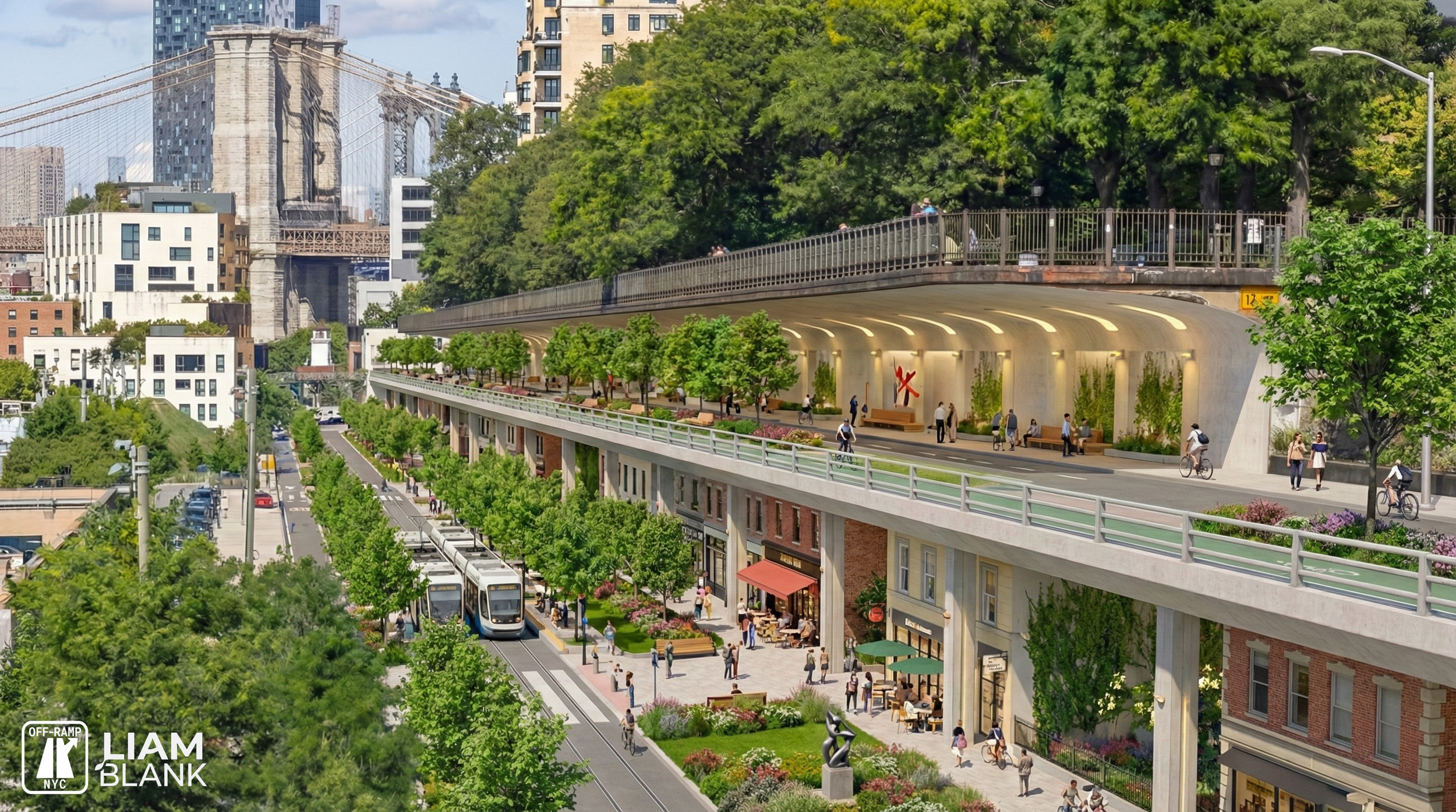
We can replace the BQE with tree-lined boulevards, new transit, and bike lanes for people and cargo.
Imagine if we could stitch together the urban fabric in neighborhoods along the BQE
Williamsburg
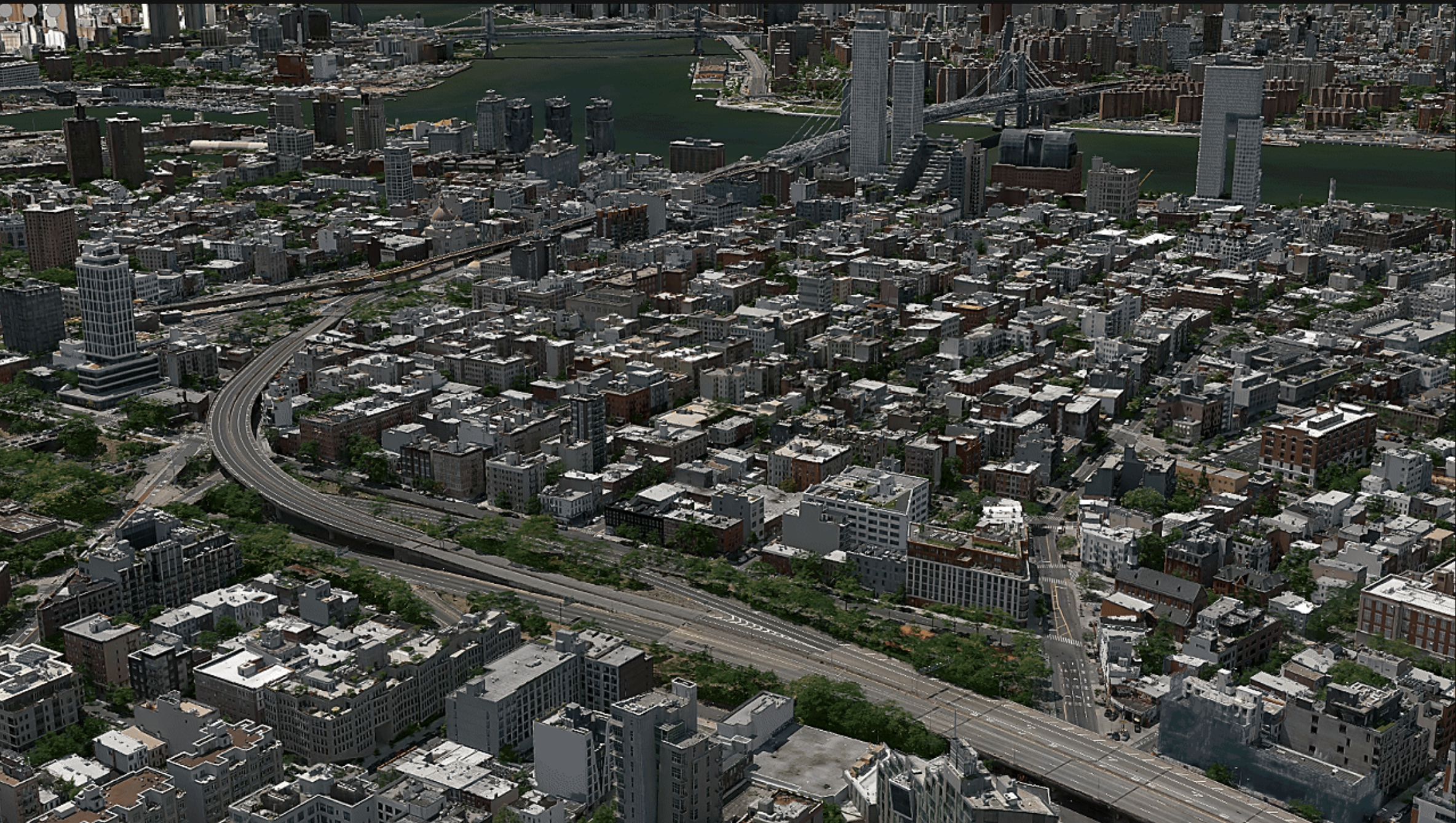
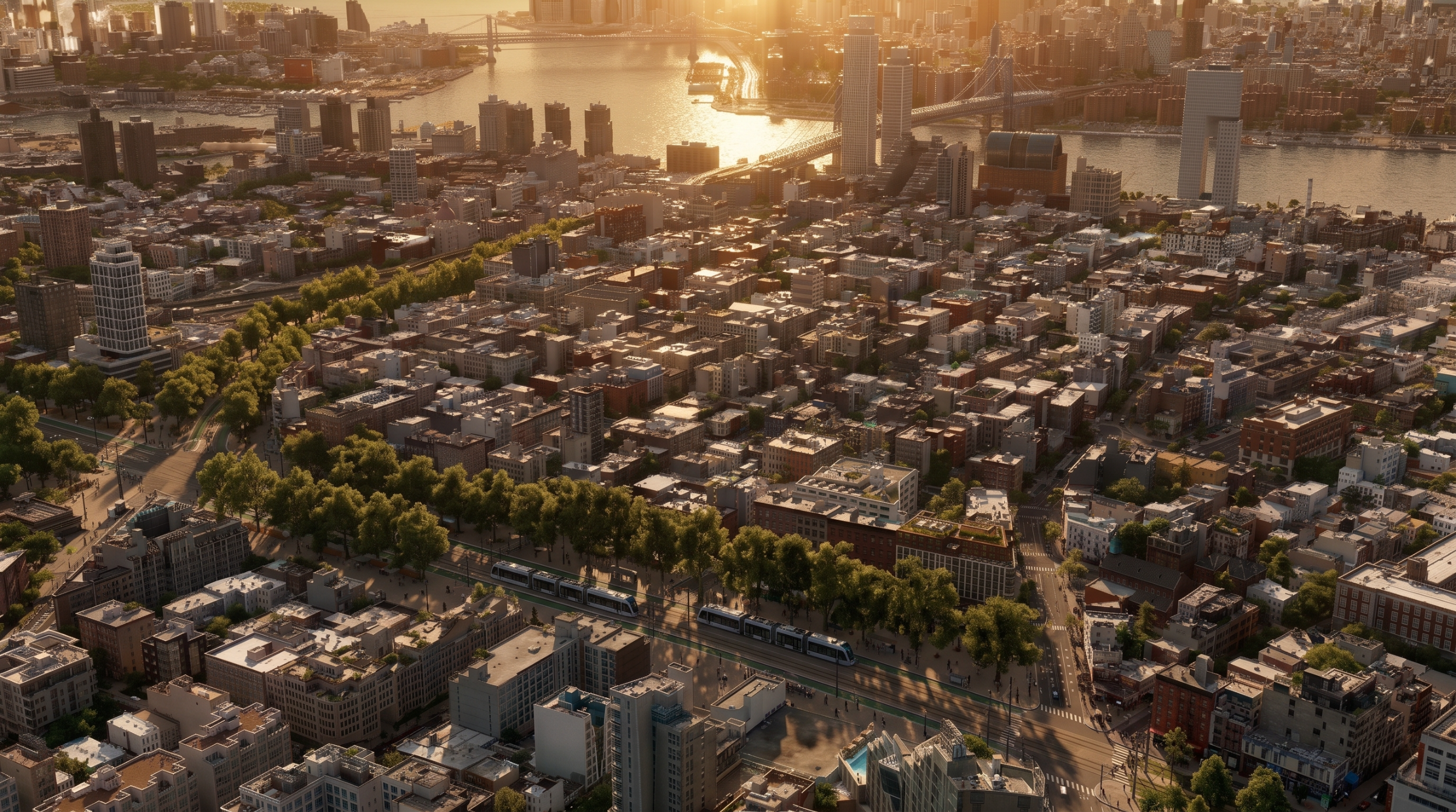
Greenpoint
“New York is overdue to make a decision on the future of the Brooklyn-Queens Expressway. So, which way, Gotham? Double down on the insanely bad ideas of the Robert Moses era, or chart a new course?”